 Call Now
 Get In Touch
 Book Now


You’re cleaning your gutters after a rainy Oregon weekend when you notice something unusual: piles of small, sand-like particles collecting in the gutter channels and near the downspouts.
At first, they look like dirt or gravel. But on closer inspection, the particles resemble the colored surface of your asphalt roof shingles.
Are your shingles falling apart? Does granule loss mean you need a new roof? Or is this a normal part of how asphalt roofing materials age?
The answer depends on several factors, including your roof’s age, the amount of material being shed, the condition of the shingles, and whether the loss follows a recent storm.
For homeowners in Portland, Gresham, Beaverton, Lake Oswego, Happy Valley, and surrounding Oregon communities, understanding roof granule loss can help distinguish routine weathering from potential roofing problems.
This guide explains what shingle granules do, why they fall off, how to identify excessive granule loss, and when professional roof repair or replacement may be necessary.
What Is Roof Granule Loss?
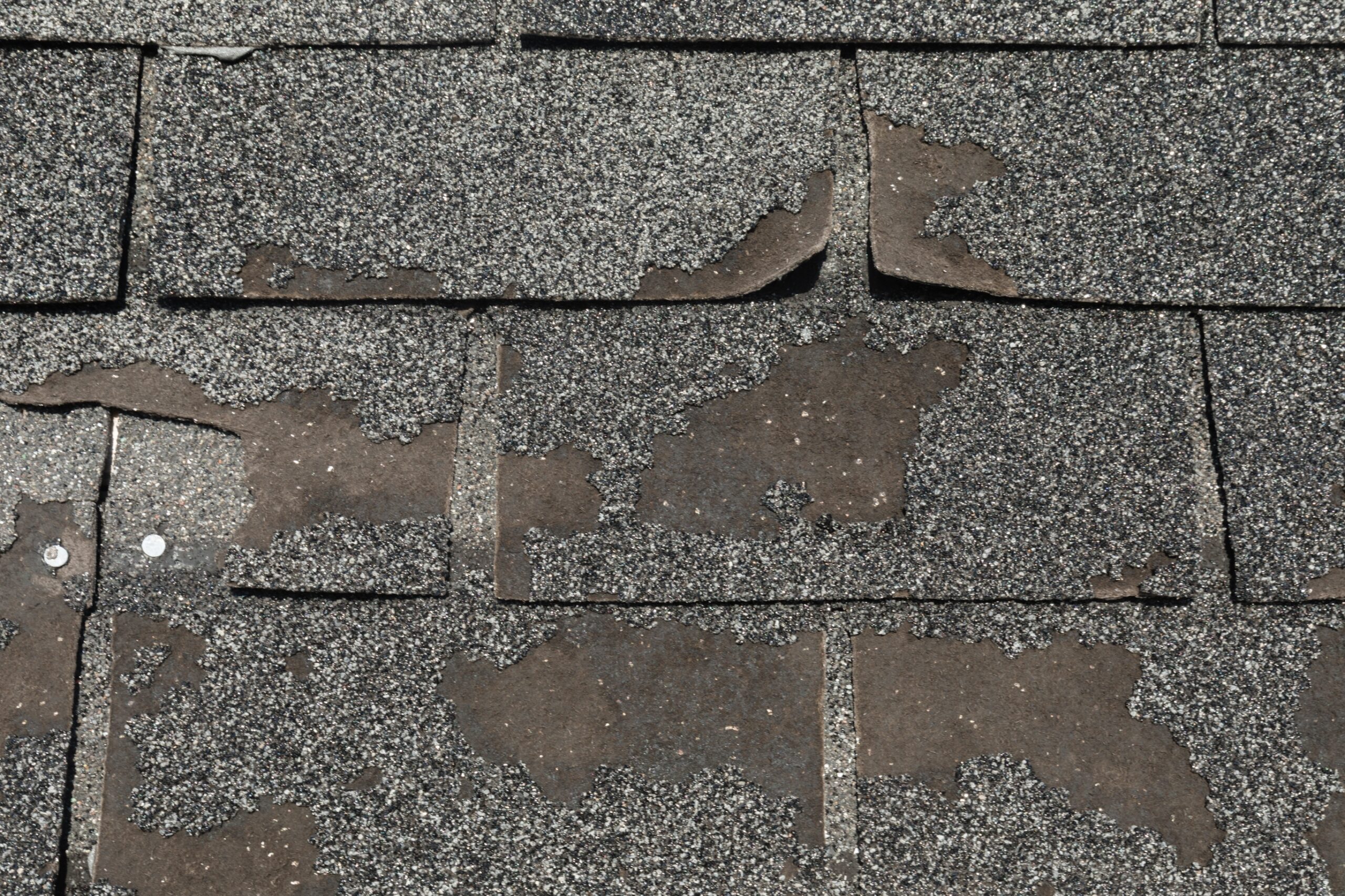
Roof granule loss occurs when the small mineral particles embedded in an asphalt shingle’s surface become detached.
These particles, commonly called roofing granules or shingle granules, form the textured outer layer of most residential asphalt shingles.
Granules are made from crushed mineral materials that are processed and often coated with pigments to achieve specific roofing colors.
They perform several important functions:
- Ultraviolet protection: Granules help shield the underlying asphalt coating from sunlight.
- Weather resistance: The mineral surface helps protect the asphalt against environmental exposure.
- Roof appearance: Colored granules give shingles their finished look and help create consistent color across the roof.
- Surface protection: They provide a protective covering over the asphalt coating.
- Specialized performance: Some shingles use specially formulated granules to help resist algae-related discoloration or improve solar reflectivity.
Granules are integral to the construction of asphalt shingles, but losing a small amount does not automatically mean a roof is defective.
In fact, manufacturers recognize that some granule shedding occurs naturally, particularly during the early life of a newly installed roof.
According to GAF Technical Advisory Bulletin TAB-R-112: Granule Loss on New Shingles, newly manufactured shingles may release excess granules without affecting their intended performance.
The challenge for homeowners is determining when normal shedding becomes a sign of deterioration.
Is It Normal to Find Roof Granules in Your Gutters?
Yes. Finding some roofing granules in your gutters is normal, especially after a new roof installation.
However, the quantity, location, and timing of the loss matter.
A handful of granules in the gutter does not necessarily indicate a problem. In contrast, extensive surface loss accompanied by visibly exposed asphalt or other shingle damage deserves attention.
Normal granule loss on new shingles
During manufacturing, asphalt shingles receive mineral granules while the asphalt coating is prepared to bond them into place.
Some additional granules remain loosely attached to the surface.
These excess particles may detach during:
- Packaging and transportation
- Handling during installation
- Normal movement of materials
- Initial rainfall events
- Early weather exposure
GAF refers to some of these excess particles as rider granules.
The manufacturer’s technical guidance explains that this shedding is generally most noticeable shortly after installation and should diminish over time.
Therefore, if you have recently had a new asphalt shingle roof installed and notice some particles in your gutters after the first several rainstorms, there may be no reason for alarm.
Granule loss on older roofs
Older asphalt shingles also lose granules through normal weathering.
Over years of exposure, shingles undergo gradual physical changes caused by sunlight, moisture, temperature changes, and environmental conditions.
As the material ages, granules may become less securely embedded in the asphalt.
The key difference is whether this occurs gradually with no obvious loss of protection or progresses into substantial areas of exposed asphalt.
Large bare patches, accelerated shedding, or granule loss occurring alongside curling and cracking can suggest a roof approaching the end of its useful life.
Roof Granule Loss: Normal Wear vs. Potential Damage
| Condition | What it may mean | Recommended response |
|---|---|---|
| Small amount of granules after new installation | Normal release of excess manufacturing granules | Observe whether shedding decreases |
| Occasional granules in an older roof’s gutters | Routine weathering | Monitor roof condition |
| Significant granules appearing after a storm | Possible wind, impact, or weather-related damage | Schedule an inspection |
| Dark, bare patches on shingles | Loss of protective mineral surfacing | Professional assessment |
| Granule loss with cracked or curled shingles | Potential advanced deterioration | Evaluate repair or replacement |
| Uneven discoloration on newer shingles | Possible surface issue or manufacturing concern | Document condition and review warranty |
| Continuous heavy shedding over several months | Potential abnormal granule loss | Contact a roofing professional |
This table is a practical screening tool rather than a substitute for a professional assessment. The amount of loose material alone cannot establish whether a roof must be replaced.
7 Common Causes of Asphalt Shingle Granule Loss
Understanding why granules detach is the first step toward identifying whether your roof is experiencing ordinary weathering or an underlying problem.
1. Normal manufacturing and installation shedding
The first cause is also one of the least concerning.
New asphalt shingles may have excess granules that were not fully embedded in the asphalt coating during manufacturing.
Rainwater washes some of these loose particles toward the eaves, where they collect inside gutters and downspouts.
This is why recently installed roofs may produce noticeable granule deposits during their first rainy season.
What homeowners should do: Watch whether the shedding gradually decreases. If the roof begins showing unusual discoloration or continues losing significant amounts of granules, have the condition reviewed.
2. Natural aging and weathering
Asphalt shingles experience continuous outdoor exposure.
Sunlight, temperature changes, precipitation, and time can alter the materials holding the surface granules in place.
Over many years, this process can contribute to gradual surface wear.
The rate of deterioration depends on factors such as:
- Shingle construction and quality
- Installation conditions
- Roof orientation
- Climate and sunlight exposure
- Ventilation and roof assembly design
- Maintenance history
- Previous storm damage
Natural aging is expected. However, advanced deterioration eventually reduces the roof covering’s ability to perform as intended.
3. Wind and storm damage
Strong winds can stress asphalt shingles, particularly when the shingles are already aging or have weakened adhesive bonds.
Wind-driven debris may also strike the roof surface.
Damage can include:
- Torn or lifted shingle tabs
- Creased shingles
- Loosened sealing strips
- Scraping or abrasion
- Granule loss concentrated near damaged sections
Granule shedding following a windstorm is not conclusive proof of structural damage.
However, when it occurs alongside missing shingles or damaged flashing, a professional inspection is appropriate.
GAF’s Technical Advisory Bulletin on Replacing Storm-Damaged Shingles explains that severe weather may cause immediate or delayed damage to roofing materials.
4. Hail impacts
Hail can cause localized granule displacement and other forms of shingle damage.
Depending on the size, hardness, and impact conditions of the hailstones, damage may appear as irregular marks, depressions, fractures, or exposed asphalt.
Some hail-related problems are not immediately obvious from the ground.
Common indicators include:
- Randomly distributed impact marks
- Localized granule loss
- Fractures in the shingle surface
- Damage to metal roof components
- Other storm-related exterior damage
Because hail damage can resemble normal wear in some circumstances, the roof’s condition should be evaluated carefully.
It is also important to distinguish physical damage from cosmetic discoloration.
5. Foot traffic and mechanical abrasion
Walking on asphalt shingles can dislodge granules, particularly when the roof surface is hot or the shingles are already brittle.
Heavy foot traffic, improper cleaning methods, and dragging equipment across the roof may cause localized surface damage.
For this reason, homeowners should avoid walking on their roofs unnecessarily.
Roofing work should be performed using appropriate safety equipment and techniques that minimize damage to the installed materials.
6. Moss growth and aggressive roof cleaning
Moss is common on shaded roofs throughout the Pacific Northwest.
It thrives where moisture remains available and sunlight is limited.
As moss develops, it can retain moisture against shingles and grow between overlapping materials.
However, granule loss associated with moss may result from several conditions, including aging shingles and improper removal methods.
One especially avoidable source of damage is pressure washing.
High-pressure cleaning can remove protective granules along with the moss or debris being targeted.
Homeowners should follow the shingle manufacturer’s recommended cleaning procedures rather than assuming aggressive washing is appropriate.
7. Manufacturing or material problems
Although some granule loss is normal, unusual or severe shedding on relatively new shingles may warrant a closer review.
Manufacturing defects can sometimes affect the adhesion of granules to the asphalt surface.
Potential warning signs include:
- Significant loss beyond the initial installation period
- Unusual color changes
- Localized bare patches without an obvious cause
- Patterns inconsistent with ordinary weathering
Not every unusual appearance is a manufacturing defect.
An inspection and review of the applicable product warranty may be needed to determine the appropriate next step.
Why Granule Loss Matters for Roof Performance
Mineral granules are not simply decorative.
They help protect the asphalt coating that forms an essential part of the shingle’s weather-resistant surface.
When granules disappear from a substantial area, more of the underlying asphalt becomes exposed to environmental conditions.
Increased ultraviolet exposure
Asphalt shingles are designed with protective mineral surfacing partly because ultraviolet radiation contributes to the aging of exposed asphalt.
When large areas lose their granules, the exposed asphalt may deteriorate faster.
This does not mean a few missing granules will cause an immediate leak.
Instead, significant surface loss may contribute to reduced long-term durability.
Accelerated surface deterioration
Asphalt materials change over time as they weather.
Advanced aging may eventually contribute to hardening, cracking, or loss of flexibility.
Granule loss can be one visible indicator that these processes are becoming more pronounced.
Uneven roof appearance
Granules determine much of a shingle’s color.
When sections lose significant amounts, the roof may develop darker or uneven areas.
However, color variations can also result from algae, staining, manufacturing variation, or lighting conditions.
A dark roof patch should not automatically be classified as granule loss without closer inspection.
Reduced confidence in remaining service life
An aging roof showing widespread surface deterioration may have less remaining useful life than one with uniform, intact shingles.
A qualified contractor can evaluate granule loss alongside other signs of aging to help determine whether repair, monitoring, or replacement makes sense.
Why Portland’s Climate Makes Granule Loss Worth Monitoring
Portland’s weather does not mean every asphalt shingle roof will deteriorate prematurely.
However, the region’s environmental conditions can influence how roofing problems develop and how homeowners notice them.
Rain regularly transports loose granules
Rainwater carries detached particles down the roof surface and into gutters.
As a result, gutter cleaning often reveals granules that homeowners would not otherwise notice.
The first major rainfall after a dry period can wash previously detached particles into the drainage system.
That can make shedding appear sudden even when the underlying process developed gradually.
Mature trees create additional maintenance demands
Portland-area homes often have mature firs, cedars, maples, and other trees near the roof.
Falling needles, leaves, twigs, and organic debris can accumulate on shingles and in roof valleys.
This debris can retain moisture and interfere with drainage.
When combined with moss growth or aging shingles, the result may be a more challenging roof maintenance environment.
Shaded roof sections may behave differently
Two slopes on the same house can experience different conditions.
A south-facing roof plane may receive greater sunlight exposure, while a north-facing slope beneath mature trees may remain damp longer.
Consequently, surface aging and biological growth may not occur evenly across the roof.
An inspection should consider these differences rather than assuming every roof section will deteriorate at the same rate.
Storms may expose existing weaknesses
Wind and rain can reveal problems that were not previously obvious.
For example, older shingles with weakened seals may experience damage during a storm that newer, properly installed materials withstand.
A post-storm inspection can help determine whether the roof suffered actual damage or is simply showing signs of normal aging.
How to Check for Excessive Granule Loss Without Climbing on Your Roof
Homeowners can perform several useful observations from the ground.
You do not need to walk on your roof to identify potential warning signs.
Step 1: Check your gutters
During routine gutter cleaning, look for accumulations of small, colored mineral particles.
A few particles are not necessarily concerning.
However, unusually large deposits, particularly if they continue appearing over time, deserve further investigation.
If you have gutter guards, particles may collect near outlets or beneath guard surfaces.
Do not remove elevated gutter components unless you can do so safely.
Step 2: Examine downspout discharge areas
Granules may be carried through downspouts and accumulate near discharge outlets.
Look for small piles of material matching your shingle color.
This can be particularly noticeable when downspouts discharge onto concrete, splash blocks, or hard landscaping.
Step 3: Look for bare or discolored shingle areas
Using binoculars or photographs taken from a safe position, look for irregular dark patches on the roof.
Do not assume every dark patch indicates granule loss.
Algae and moisture staining can produce similar appearances.
Step 4: Check for related roofing damage
Granule loss is more concerning when accompanied by other problems.
Look for:
- Curled or lifted shingles
- Missing shingle sections
- Cracked or broken tabs
- Damaged ridge caps
- Loose flashing
- Uneven roof areas
- New interior water stains
Several symptoms occurring together strengthen the case for a professional inspection.
Step 5: Document changes over time
Photograph accessible gutter deposits and visible roof conditions.
Record approximately when they appeared, particularly following storms.
If your roof was recently installed, compare current observations with any installation photographs or paperwork.
This documentation helps your contractor understand whether the condition is new, recurring, or progressing.
When Does Granule Loss Mean You Need Roof Repair?
Granule loss does not automatically require repairs.
The decision depends on whether the affected shingles are still performing properly and whether other damage is present.
Localized storm damage
If a limited number of shingles show impact damage, tearing, or related deterioration, targeted replacement may be possible.
The surrounding shingles must be in suitable condition to support a durable repair.
Learn more about roof repair services in Greater Portland.
Damage near roof penetrations
A small patch of surface damage near a chimney, plumbing vent, or skylight may occur alongside a flashing problem.
In these cases, the underlying moisture issue may be more important than the visible granule loss itself.
Repairing the flashing or penetration detail can be necessary to prevent continued water intrusion.
Isolated deterioration on an otherwise healthy roof
A limited section of shingles may deteriorate differently from the remainder of the roof.
A professional can determine whether individual shingles can be replaced or whether a larger repair is advisable.
Why simply adding granules is not a permanent repair
Homeowners may encounter claims that loose roofing granules can be reapplied to restore an old shingle.
However, scattering granules onto damaged asphalt is not equivalent to restoring the original manufacturing bond or the shingle’s tested performance.
GAF specifically cautions against treating the application of loose granules with asphalt cement as a permanent solution in its storm-damage technical guidance.
A suitable repair should address the damaged roofing material itself.
When Is Roof Replacement the Better Choice?
In some circumstances, granule loss is one of several indicators that a roof is reaching the end of its service life.
Replacement deserves consideration when deterioration is widespread or accompanied by other significant roofing problems.
Potential warning signs include:
- Extensive bare areas across multiple roof sections
- Recurring leaks
- Widespread curling or cracking
- Significant shingle brittleness
- Multiple previous repairs
- Moisture-related decking deterioration
- Roof age consistent with advanced wear
The remaining service life of a roof cannot be determined from granule loss alone.
A proper evaluation should account for the roofing system as a whole.
Repair vs. replacement comparison
| Roof condition | Repair may be appropriate | Replacement may be appropriate |
|---|---|---|
| Minor granule shedding on new shingles | Usually no repair needed | Usually unnecessary |
| Small damaged area on otherwise healthy roof | Often | Usually unnecessary |
| Widespread bare shingles | Less likely | Often |
| Granule loss with several active leaks | Depends on extent | May be appropriate |
| Aging roof with curling and cracking | Limited benefit in some cases | Often |
| Isolated storm-damaged shingles | Potentially | If damage is extensive |
| Decking or widespread underlying damage | May require substantial repair | May be the better long-term option |
If an aging roof requires repeated repairs, compare the benefits of continued maintenance with the long-term value of replacing the roof covering.
Blue Moon offers residential roof replacement services throughout the Portland metro area.
Does Roof Granule Loss Affect Manufacturer Warranties?
Manufacturer warranties distinguish between various causes of roofing deterioration.
Normal weathering, storm damage, installation problems, and manufacturing defects are not necessarily treated the same way.
For example, GAF’s technical guidance explains that normal early granule shedding is not considered a manufacturing defect.
Severe granule loss caused by a manufacturing defect may be evaluated under the applicable limited warranty.
Damage caused by storms or other excluded events may be subject to different coverage provisions.
Questions to ask about your roofing warranty
- Which manufacturer and shingle product do I have?
- What limited warranty applies to my installation?
- Does my warranty cover manufacturing defects involving granule adhesion?
- What documentation is required to submit a claim?
- Was an enhanced system warranty registered?
- Does the warranty distinguish material defects from weather damage?
- What exclusions or limitations apply?
Blue Moon Roofing & Gutters offers GAF roofing systems, including eligible installations with GAF System Plus warranty coverage.
Blue Moon also offers a separate 10-year workmanship warranty for qualifying roofing installations.
These are distinct forms of protection. Their terms should be reviewed separately.
A warranty period is not a guarantee that shingles will experience no aging, weathering, or surface changes during that time.
Can Homeowners Insurance Cover Granule Loss?
Insurance coverage depends on the cause of the damage and the terms of the homeowner’s policy.
Damage associated with a covered sudden event may be treated differently from ordinary age-related deterioration.
Storm-related granule loss
If granule loss occurs after a documented hail or wind event, a qualified roof inspection may help determine whether the shingles experienced physical damage.
Photographs, weather-event records, and an inspection report can be useful when discussing the condition with an insurer.
However, granules appearing in gutters after a storm do not automatically establish that the roof qualifies for an insurance claim.
Normal aging and wear
Ordinary deterioration is generally handled differently from sudden accidental damage under homeowners insurance policies.
If an older roof has gradually lost granules over many years, replacement may be considered a maintenance expense rather than an insured event.
Documenting the condition
If you suspect storm damage:
- Photograph visible damage safely.
- Record the approximate date of the storm.
- Keep relevant roofing installation documents.
- Request a professional inspection.
- Review your insurance policy and deductible.
- Discuss the findings with your insurer before assuming coverage.
A contractor can provide information about roofing conditions, but the insurance carrier ultimately determines coverage under the policy.
How to Prevent Premature Granule Loss
No maintenance program can completely stop asphalt shingles from aging.
However, appropriate care can help reduce avoidable damage and support the roof’s intended service life.
Avoid pressure washing
Pressure washing can dislodge granules and damage the shingle surface.
Use manufacturer-approved cleaning methods instead.
Address moss before it becomes extensive
Inspect shaded roof areas and arrange appropriate treatment when moss becomes problematic.
Avoid scraping or pulling aggressively at the shingles.
Keep roof valleys clear
Accumulated needles, leaves, and debris can interfere with drainage.
Clearing these areas reduces the chance of trapped moisture and hidden deterioration.
Maintain gutters and downspouts
A functioning gutter system helps prevent drainage problems at the roof edge.
Routine cleaning also creates opportunities to monitor whether significant quantities of granules are accumulating.
Minimize unnecessary roof traffic
Walking on shingles can damage the protective granule surface, particularly during hot weather or when roofing materials are already brittle.
Leave elevated inspections and maintenance to appropriately equipped professionals.
Arrange inspections after significant storms
Wind, hail, and falling branches can damage shingles even when the problem is not immediately visible from the ground.
A professional assessment can help identify areas requiring repair.
Maintain a roofing record
Keep copies of inspections, repairs, warranty documents, and installation information.
Photographs showing how the roof changes over time can be especially helpful.
A Seasonal Roof Granule Loss Checklist for Oregon Homes
Spring
- Inspect gutters following winter weather.
- Look for unusually large granule deposits.
- Check visible roof sections for new damage.
- Review areas affected by winter windstorms.
Summer
- Examine accessible photographs for changes in roof color.
- Schedule repairs while conditions are favorable.
- Avoid unnecessary foot traffic on hot shingles.
- Review the roof’s age and maintenance history.
Fall
- Clean gutters before the main rainy season.
- Remove accumulated leaves and needles.
- Check downspout outlets for granule deposits.
- Investigate any known shingle damage before prolonged rainfall.
Winter
- Monitor leaks during heavy rain.
- Look for missing shingles after windstorms.
- Document significant changes from safe locations.
- Arrange professional repairs when necessary.
Regular observations can help identify trends without requiring homeowners to perform unsafe roof inspections.
What to Expect During a Professional Granule Loss Inspection
A thorough inspection should evaluate more than the quantity of particles found in a gutter.
The contractor should assess the roof’s overall condition and determine whether granule loss is a primary problem or a symptom of another issue.
Roof surface condition
The inspection may include checking for:
- Bare or exposed asphalt
- Shingle cracks
- Curling or cupping
- Impact damage
- Missing shingles
- Abnormal patterns of deterioration
Flashing and roof transitions
The inspector should also consider roof penetrations, chimneys, valleys, and wall transitions where drainage issues may occur.
Roof age and material information
Knowing the original installation date and product type helps put surface changes into context.
A relatively new roof showing extensive bare patches may warrant a different investigation from a roof already approaching the end of its expected service life.
Recommendations
A useful inspection should explain whether the condition calls for monitoring, localized repairs, further investigation, or replacement.
Photos and clear descriptions help homeowners make informed decisions without relying solely on generalized statements about roof age.
For help evaluating the condition of your shingles, explore Blue Moon’s roof inspection services.
Frequently Asked Questions About Roof Granule Loss
Why are there black granules in my gutters?
Dark particles in gutters may be roofing granules shed from asphalt shingles. They may also be mixed with dirt, decomposed leaves, and other debris. Small amounts can be normal, but significant deposits deserve closer examination.
Is it normal for new shingles to lose granules?
Yes. New shingles may shed loose excess granules from manufacturing and installation. GAF explains that this condition generally decreases over time and does not necessarily indicate a defect.
How much granule loss is too much?
There is no universal quantity of gutter granules that proves a roof is failing. The severity depends on the extent of exposed asphalt, the condition of the shingles, the roof’s age, and whether other damage is present.
Do granules in gutters mean I need a new roof?
No. Granules may accumulate during normal weathering. Replacement is more likely to be considered when extensive surface loss occurs alongside widespread deterioration or other significant problems.
Can heavy rain remove roof granules?
Rain can wash already loose granules into gutters and downspouts. Finding deposits after a heavy rainfall does not, by itself, demonstrate that the storm damaged the roof.
Can moss cause shingles to lose granules?
Moss-related moisture and aggressive moss removal can contribute to roofing problems. However, moss is not the only possible cause of granule loss, and the underlying roof condition must be evaluated.
Does hail damage always cause granule loss?
No. Hail damage can take several forms, including localized granule displacement, surface fractures, or other impact-related changes. A proper inspection considers multiple indicators rather than granule loss alone.
Can roofing granules be reapplied?
Simply adding loose granules does not restore a shingle’s original manufactured surface or performance. Damaged shingles may require proper repair or replacement.
How long do asphalt shingles last after losing granules?
There is no reliable universal timeline. Small amounts of normal shedding may have little practical significance, while extensive exposed asphalt can indicate advanced deterioration. A professional should evaluate the roof’s remaining condition.
Should I replace my roof if the shingles are changing color?
Not necessarily. Color changes may result from granule loss, algae, staining, or other causes. A professional inspection can help distinguish cosmetic changes from roofing damage.
Is granule loss covered by the GAF warranty?
Coverage depends on the cause and the specific warranty terms. Normal shedding and storm damage are treated differently from qualifying manufacturing defects. Review the applicable product warranty for details.
Can I inspect roof granule loss myself?
You can examine gutter deposits, downspout outlets, and visible roof sections safely from the ground. Avoid climbing onto the roof, especially when surfaces are wet, steep, or potentially damaged.
Don’t Ignore Changes in Your Roof’s Condition
Finding roofing granules in your gutters does not automatically mean something is wrong.
In many cases, especially with newly installed asphalt shingles, some granule shedding is expected.
However, extensive loss of protective surface material, visible bare patches, recurring leaks, and other signs of deterioration deserve professional attention.
The goal is not to replace a roof prematurely. It is to recognize meaningful warning signs early, preserve serviceable roofing materials where possible, and address damage before moisture reaches the underlying structure.
For homeowners throughout Portland, Gresham, Beaverton, Hillsboro, Lake Oswego, and surrounding communities, seasonal inspections and appropriate maintenance can help protect the roof through Oregon’s changing weather conditions.
Concerned About Granules in Your Gutters or Worn Asphalt Shingles?
Blue Moon Roofing & Gutters is based in Gresham, Oregon, and serves residential homeowners throughout the Greater Portland area.
Whether you have noticed unusual shingle wear, are concerned about storm damage, or want to understand the remaining condition of an aging roof, our team can help you evaluate the next steps.
Call (503) 825-2583 or explore our roofing services to learn more.
References and Further Reading
The following manufacturer and industry resources offer additional technical information on asphalt shingles, granule loss, and roof performance.
GAF — Granule Loss on New Shingles
Technical Advisory Bulletin TAB-R-112 (PDF)
Official manufacturer guidance explaining normal granule shedding on new asphalt shingles, signs of abnormal loss, and potential warranty considerations.
GAF — Replacement of Storm-Damaged Shingles
Technical Advisory Bulletin TAB-R-126 (PDF)
Manufacturer guidance regarding storm-related shingle deterioration, delayed damage, surface granule loss, and considerations for replacing damaged shingles.
GAF — When Is It Time for a New Roof?
Guidance on identifying warning signs of an aging roofing system, including excessive granule loss, curled shingles, and other visible conditions.
Asphalt Roofing Manufacturers Association (ARMA)
Roofing Technical Bulletins and Resources
Industry resources covering asphalt shingle installation, repairability, maintenance, and roofing performance.