 Call Now
 Get In Touch
 Book Now

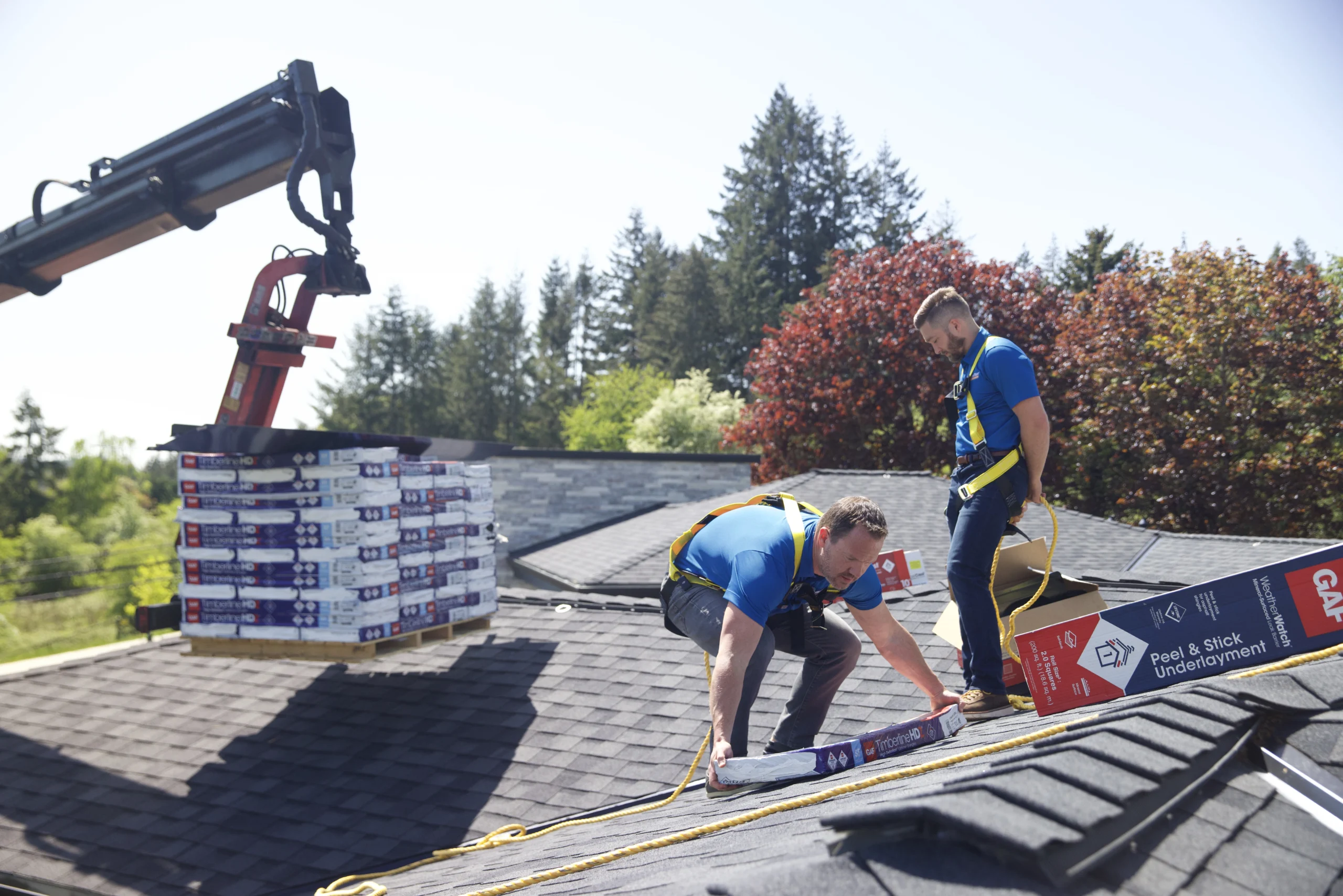
Your shingles may be the most visible part of your roof, but the material underneath them is just as important. When that hidden layer becomes wet, weakened, or deteriorated, even the highest-quality shingles cannot compensate for an unstable foundation.
For homeowners in Portland, Gresham, Beaverton, Lake Oswego, and surrounding Oregon communities, roof decking damage is an important consideration during roof repairs and replacements. The Pacific Northwest’s extended rainy seasons, mature trees, and persistent moisture create conditions where small roofing problems can lead to damage beneath the surface.
One of the biggest surprises during a roof replacement is discovering that sections of the wood decking need to be replaced after the existing shingles are removed.
The good news is that understanding how roof decking works, recognizing early warning signs, and knowing what questions to ask your contractor can help you make informed decisions and avoid unnecessary surprises.
This guide explains what roof decking is, how moisture damages it, whether plywood or OSB is better for your home, what happens when rotted decking is discovered, and how to protect your investment.
What Is Roof Decking?
Roof decking, also called roof sheathing, is the structural surface attached to your home’s rafters or roof trusses. It provides the base for underlayment, flashing components, and the finished roofing material.
On most modern residential roofs, decking consists of plywood or oriented strand board (OSB). Some older Oregon homes have spaced boards or solid plank decking instead.
Although roof decking is usually invisible from outside the home, it performs several essential functions:
- Structural support: Provides a continuous surface over roof framing and contributes to the roof assembly’s structural performance.
- Fastener attachment: Gives roofing nails and other approved fasteners a suitable base when properly specified.
- Roof system stability: Supports underlayment, shingles, and other roofing components.
- Load distribution: Helps transfer roof loads into the supporting framing.
- Weather protection: Works with underlayment, flashing, and roofing materials to form a durable roof assembly.
An important distinction: roof decking itself is not a substitute for waterproof roofing materials. It must remain protected by a correctly installed roof system.
According to APA – The Engineered Wood Association, reliable roof performance depends on several interconnected components, including sheathing, underlayment, roofing material, flashing, and ventilation.
A roof is only as dependable as the system beneath its finished surface. Replacing shingles without addressing damaged decking can leave important structural and moisture problems unresolved.
Why Roof Decking Damage Is a Concern in Portland, Oregon
Roof decking can deteriorate anywhere, but Oregon’s climate presents particular challenges.
Portland experiences an extended wet season, and residential roofs may remain damp between rain events. Homes surrounded by Douglas firs, cedars, maples, and other mature trees can experience additional moisture exposure from shade and accumulated debris.
When water finds its way beneath roofing materials, the decking may remain wet long enough to begin deteriorating.
Persistent moisture and slow drying
Roof decking generally performs well when it is properly protected and allowed to remain dry.
However, chronic leaks, trapped condensation, or repeated wetting can create conditions favorable to fungal decay.
Damage may develop around roof penetrations, valleys, chimneys, and other areas where water must be carefully redirected.
Moss and debris accumulation
Moss does not automatically mean the decking underneath has rotted. However, extensive moss and organic debris can interfere with drainage, retain moisture, and conceal damaged shingles.
In shaded Portland neighborhoods, moss growth deserves particular attention when it appears alongside lifted shingles, repeated leaks, or water staining.
Attic condensation
Not all decking damage starts with rain entering from outside.
Warm, humid air from the living space can enter a cold attic through gaps around ceiling penetrations. Under certain conditions, moisture can condense on the underside of roof sheathing.
This is why proper air sealing, insulation, moisture control, and ventilation matter.
The U.S. Department of Energy’s attic air-sealing guidance explains how reducing air leakage into attics can help prevent moisture problems while improving home energy efficiency.
Wind-driven rain and storm damage
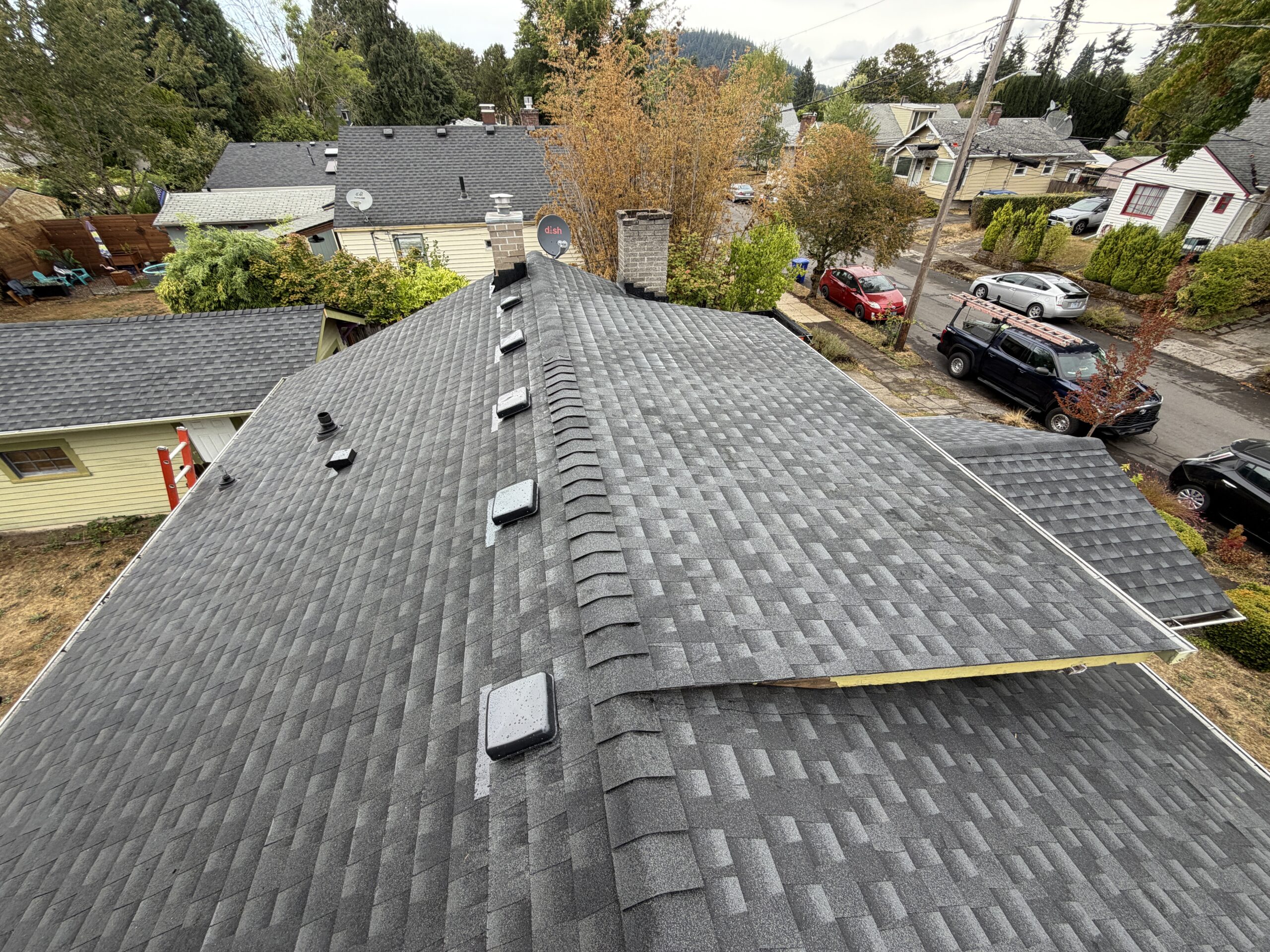
Portland-area windstorms can loosen shingles, disturb flashing, or damage roof penetrations.
Even relatively small areas of exposed underlayment or improperly sealed roofing details can allow moisture into the roof assembly.
When damage is not repaired promptly, repeated storms may worsen the problem.
7 Warning Signs Your Roof Decking May Be Damaged
Because decking is hidden beneath the roof covering, homeowners often discover damage only after symptoms appear elsewhere.
The following warning signs should prompt closer inspection.
1. Sagging or uneven rooflines
A roof should generally have a consistent profile appropriate to its design.
Visible dips, depressions, or unusual waviness may indicate damaged sheathing, inadequate support, framing movement, or other structural concerns.
What to look for:
- Depressions between rafters or trusses
- Areas that appear to sag
- Unusual changes in the roof’s shape
- Localized deformation near previous leak locations
Not every uneven roof surface indicates rot. Certain sheathing products can expand or buckle from moisture exposure without necessarily losing their structural capacity.
However, visible changes in roof shape should always be evaluated rather than ignored.
2. Water stains on attic sheathing
Dark stains on the underside of roof decking may indicate historical or ongoing moisture exposure.
Some discoloration can be cosmetic, so the appearance alone does not establish that the wood needs replacement.
More concerning signs include staining accompanied by dampness, softened wood, fungal growth, or recurring interior leaks.
3. Soft, deteriorated, or crumbling wood
Healthy structural sheathing should retain the integrity expected for its material and design.
Wood that has become soft, crumbly, delaminated, or visibly decayed may no longer provide the required support.
Do not attempt to test roof decking by walking across suspicious areas. Damaged panels can be unsafe.
4. Recurring roof leaks
A single leak may be caused by an isolated flashing or shingle problem.
Repeated leaks in the same location suggest the underlying assembly deserves closer evaluation.
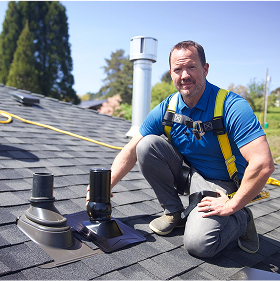
For example, a leaking pipe boot may allow moisture into the decking around a plumbing vent over time.
The pipe boot might be replaced, but damaged decking could remain if the surrounding structure is not inspected.
Learn more about diagnosing leaks through Blue Moon’s roof repair services.
5. Musty odors and attic moisture
A persistent musty smell in the attic can indicate excess moisture.
Possible causes include:
- Roof leaks
- Condensation
- Poorly vented bathroom exhaust fans
- Air leakage from conditioned living spaces
- Plumbing or HVAC-related moisture
Because several conditions can create similar symptoms, identifying the source is essential before choosing a repair.
6. Damaged roofing near valleys and penetrations
Certain roof areas experience more complex water movement than others.
Pay particular attention to:
- Roof valleys
- Chimneys
- Skylights
- Plumbing vents
- Roof-to-wall transitions
- Eaves and roof edges
Deteriorated flashing or shingles in these areas may allow moisture to reach the decking underneath.
7. Visible deterioration during roof replacement
Sometimes there are no obvious warning signs before a roofing project begins.
The existing shingles and underlayment may conceal localized damage that becomes visible only after tear-off.
This is one reason a professional roof replacement should include evaluation of the exposed deck before new roofing materials are installed.
Roof Decking Warning Signs: What They May Mean
| Warning sign | Possible underlying issue | Recommended action |
|---|---|---|
| Sagging roof section | Sheathing or framing problem | Prompt structural evaluation |
| Dark attic staining | Previous or active moisture exposure | Determine moisture source |
| Soft or deteriorated decking | Possible wood decay | Professional assessment and replacement if needed |
| Recurring ceiling leak | Flashing, shingle, or decking issue | Roof leak inspection |
| Musty attic odor | Excess moisture or condensation | Investigate ventilation, air leakage, and leaks |
| Water near chimney | Failed flashing or surrounding roofing | Inspect chimney transition |
| Localized roof waviness | Moisture-related panel movement or support problem | Assess structural condition |
These symptoms are diagnostic clues, not automatic proof that the entire roof deck must be replaced.
Plywood vs. OSB Roof Decking: Which Is Better?
One of the most common questions homeowners ask during a roof replacement is whether plywood or OSB is the better roof decking material.
Both are widely used engineered wood products, and both can provide dependable structural performance when properly specified, installed, and protected from moisture.
However, they differ in construction, behavior, and cost.
Plywood roof decking
Plywood consists of thin wood veneers bonded together in alternating grain directions.
This construction provides strength and dimensional stability.
Potential advantages include:
- Proven performance in structural applications
- Good fastener-holding characteristics when properly specified
- Availability in multiple grades and thicknesses
- Broad compatibility with residential roofing systems
Plywood is frequently selected for roof sheathing repairs, particularly when matching existing plywood decking.
OSB roof decking
Oriented strand board is manufactured from compressed wood strands bonded with adhesives under heat and pressure.
OSB is widely used in residential construction because it offers consistent panel dimensions and generally costs less than comparable plywood.
Potential advantages include:
- Economical material choice
- Reliable structural performance when correctly rated
- Consistent manufactured panel properties
- Broad availability
OSB is not inherently an unsuitable material for rainy climates. However, like plywood, it must be protected from prolonged moisture exposure and installed according to its rated application.
Plywood vs. OSB comparison chart
| Feature | Plywood | OSB |
|---|---|---|
| Construction | Cross-laminated wood veneers | Compressed, bonded wood strands |
| Structural use | Suitable when correctly rated | Suitable when correctly rated |
| Typical material cost | Often higher | Often lower |
| Moisture behavior | Can swell or delaminate with prolonged exposure | Can swell, particularly at edges, with prolonged exposure |
| Availability | Widely available | Widely available |
| Common residential use | Roof decking and repairs | Roof decking and new construction |
| Most important consideration | Correct grade, thickness, fastening, and moisture protection | Correct rating, thickness, fastening, and moisture protection |
Which material should Portland homeowners choose?
There is no universal answer.
The correct material depends on several factors:
- Existing roof construction
- Rafter or truss spacing
- Structural requirements
- Panel thickness and span rating
- Applicable building codes
- Roofing manufacturer requirements
- Budget and availability
In some situations, matching the existing sheathing material is a practical approach. In others, replacing damaged panels with appropriately rated alternatives may be acceptable.
The most important factor is whether the selected material satisfies the roof assembly’s structural and installation requirements.
APA provides technical guidance on wood structural panel moisture behavior and buckling.
What Happens When Rotted Roof Decking Is Found During Replacement?
Discovering damaged decking during a roof replacement can be frustrating, especially if the initial inspection did not reveal a problem.
However, hidden damage is not necessarily evidence that the contractor made a mistake during the estimate.
Existing shingles and underlayment can conceal conditions that are impossible to fully inspect beforehand without removing materials.
The important issue is how the discovery is handled.
Step 1: Remove the existing roofing materials
During a typical roof replacement, old shingles and underlayment are removed to expose the existing decking.
The crew can then evaluate the visible sheathing for deterioration, structural deficiencies, or other problems.
Step 2: Identify compromised areas
The exposed decking should be checked for conditions such as:
- Wood decay
- Delamination
- Soft or deteriorated panels
- Significant moisture damage
- Inadequate or damaged fastening
- Gaps or conditions that interfere with the roofing system
Not every stained or weathered panel needs replacement. The decision should be based on its actual condition and structural suitability.
Step 3: Document the damage
If replacement is recommended, homeowners should be shown the affected areas.
Photographs and clear explanations can help distinguish necessary repairs from optional improvements.
A useful record identifies the location, reason for replacement, and approximate quantity of material involved.
Step 4: Explain any change in project scope
Decking repairs may require materials and labor beyond the original roofing proposal.
The homeowner should understand what was discovered, why repairs are necessary, and whether the project scope must change.
A written change order is an appropriate way to document changes that affect the agreed work or price.
The Oregon Construction Contractors Board recommends written agreements and documented changes to construction contracts.
Step 5: Replace damaged decking
Compromised panels or boards should be replaced with materials suitable for the roof assembly.
The replacement must be properly supported and fastened according to applicable requirements.
If underlying framing is damaged, additional assessment or structural repair may be necessary.
Step 6: Complete the roofing system
Once the decking is sound, the crew can proceed with the appropriate underlayment, water-protection details, flashing, and finished roofing materials.
This helps ensure the new roofing system is installed over a suitable foundation.
Can You Install New Shingles Over Damaged Roof Decking?
Installing new shingles over structurally compromised decking is not a proper solution.
Shingles need a suitable fastening surface, and the underlying structure must support the roof system.
Damaged decking can cause several problems:
- Inadequate nail holding
- Movement beneath shingles
- Uneven roofing surfaces
- Continued moisture deterioration
- Increased likelihood of premature roofing problems
Simply covering damaged decking may conceal the issue temporarily without addressing the cause.
The same principle applies to reroofing over old shingles. Even where an overlay is otherwise allowed, it is not a substitute for repairing an unsuitable roof deck.
New shingles improve the weather-resistant surface of your home, but they cannot restore the structural integrity of deteriorated wood underneath.
Does Roof Decking Damage Mean You Need an Entirely New Roof?
Not necessarily.
Roof decking damage may be isolated to a small area, particularly when the moisture problem originated from a specific penetration or flashing detail.
For example, water entering around a plumbing vent could damage several square feet of decking while leaving the surrounding assembly relatively sound.
In other situations, extensive moisture damage may affect multiple roof areas.
The right repair depends on the scope and condition of the damage.
Localized decking repair may be appropriate when:
- Damage is confined to a defined area
- Surrounding roofing materials remain serviceable
- The underlying framing is sound
- The original leak source can be corrected
- The affected section can be repaired without compromising adjacent materials
More extensive replacement may be appropriate when:
- Multiple roof areas are deteriorated
- Existing sheathing is unsuitable for the planned roofing system
- Widespread leaks have affected the structure
- The roof covering is already near the end of its useful life
- Large sections of decking cannot provide reliable support
Homeowners facing these decisions can learn more about Blue Moon’s roof replacement services.
What Affects the Cost of Roof Decking Replacement?
The cost of replacing roof decking varies considerably because the actual scope may not be known until the roof is opened.
For this reason, homeowners should be cautious about relying on generic online prices without understanding the condition of their property.
The most important cost factors include the following.
Amount of decking requiring replacement
Replacing one or two isolated panels is different from replacing sheathing across a large roof area.
Material quantities and labor requirements increase as the damaged area grows.
Type of decking material
Plywood, OSB, and dimensional lumber can differ in cost and installation requirements.
Panel thickness, structural rating, and existing construction also influence material selection.
Roof accessibility
Steep roofs, multiple stories, narrow access areas, and complex rooflines can make materials handling and installation more difficult.
Underlying framing condition
If deterioration extends into rafters, trusses, or other structural components, the repair may involve additional work beyond replacing sheathing.
Roofing system requirements
Different roofing materials and installation specifications may affect the decking condition, fastening requirements, and preparation needed.
Whether work is combined with a full roof replacement
When decking repairs occur during a planned tear-off, the affected areas may already be exposed.
Separate repair projects can involve additional work to remove and reinstall surrounding roofing materials.
How to evaluate a decking repair proposal
Instead of focusing only on a single price figure, homeowners should understand:
- Why the decking requires replacement
- What material will be installed
- How much material is expected to be replaced
- Whether hidden framing damage is suspected
- How additional repairs will be approved
- How the completed work will be documented
A clear proposal should help you understand both the scope of the work and the total cost.
How to Reduce the Risk of Roof Decking Damage
Not every moisture problem is preventable, but proactive maintenance can significantly reduce the likelihood of deterioration going unnoticed.
Schedule regular roof inspections
A professional inspection can identify damaged shingles, deteriorated flashing, blocked drainage areas, and visible moisture problems before they become more serious.
Inspections are particularly helpful for older roofs or homes with recurring leaks.
Blue Moon offers roof inspection and maintenance services for Portland-area homeowners.
Address small leaks promptly
A minor leak around a vent or flashing detail may seem insignificant.
However, repeated wetting can eventually damage sheathing, insulation, and other building materials.
Small leaks should be investigated before they develop into larger problems.
Keep gutters and roof valleys clear
Leaves, needles, and moss debris can interfere with water drainage.
Keeping gutters and valleys clear helps water move away from vulnerable roof edges and intersections.
Maintain appropriate attic conditions
Moisture control starts inside the home as well as outside.
Attic air sealing, insulation, correctly terminated exhaust fans, and appropriate ventilation can help reduce condensation-related moisture exposure.
Learn more about roof ventilation and attic systems.
Watch for changes after storms
After significant wind or rain, look for missing shingles, damaged flashing, displaced ridge caps, and new interior staining.
Exterior inspections should be performed safely from the ground whenever possible.
Maintain records of previous work
Save roofing contracts, inspection reports, installation dates, warranty documents, and photographs.
These records can help identify patterns when a new problem appears.
Roof Decking and Attic Ventilation: Understanding the Connection
Roof decking can become wet from condensation even when the shingles above it are intact.
This is particularly relevant to homes with conventional vented attics.
During colder weather, warm indoor air can escape through openings in the attic floor.
If that air contains moisture and comes into contact with sufficiently cold surfaces, condensation may occur.
Common air leakage pathways include:
- Attic access hatches
- Plumbing penetrations
- Electrical openings
- Gaps around framing
- Recessed lighting fixtures
- Mechanical and duct penetrations
Reducing these air leaks can be an important part of controlling attic moisture.
Ventilation alone is not always enough
Adding more roof vents does not automatically solve every condensation problem.
An effective solution begins with understanding how moisture enters the attic.
Air sealing can reduce the amount of conditioned, moisture-laden indoor air entering the space. Insulation helps manage heat transfer, while properly designed ventilation can support drying in suitable roof assemblies.
Some homes have unvented or conditioned attic systems that require different design considerations.
This is why attic upgrades should be evaluated as a complete system rather than as isolated products.
The U.S. Department of Energy recommends sealing attic-floor penetrations when improving existing vented attics.
Roof Decking and Manufacturer Warranties
Homeowners frequently pay close attention to the warranty period printed on their shingles.
However, the quality and suitability of the underlying roof assembly also matter.
Manufacturer installation requirements can address:
- Decking suitability
- Approved fastening surfaces
- Underlayment
- Shingle installation methods
- Flashing
- Ventilation or related conditions
An unsuitable or damaged deck can interfere with proper installation and potentially affect warranty eligibility.
Blue Moon Roofing & Gutters offers GAF roofing systems, including options eligible for GAF System Plus warranty coverage when applicable requirements are satisfied.
Blue Moon also provides a separate 10-year workmanship warranty for qualifying roofing installation work.
Manufacturer warranties and contractor workmanship warranties cover different responsibilities. Homeowners should review the actual documents for coverage terms, limitations, exclusions, and eligibility requirements.
A long manufacturer warranty does not mean every type of roof damage is covered.
The Homeowner’s Pre-Replacement Decking Checklist
Before signing a roofing replacement agreement, use this checklist to understand how hidden decking issues will be handled.
-
Ask how the existing decking will be inspected.
-
Confirm whether the project includes full tear-off.
-
Discuss the possibility of hidden moisture damage.
-
Ask which replacement sheathing materials are appropriate.
-
Confirm how damaged decking quantities will be documented.
-
Understand how additional work will be approved.
-
Ask whether the attic will be checked for moisture problems.
-
Confirm how flashing and drainage issues will be addressed.
-
Request photos of significant hidden damage.
-
Keep copies of the completed work scope and warranty information.
A little preparation helps ensure unexpected discoveries are handled transparently.
Frequently Asked Questions About Roof Decking
How do I know if my roof decking is rotten?
Common warning signs include sagging roof areas, recurring leaks, soft or deteriorated wood, attic moisture staining, and visible decay. However, roof decking damage often remains hidden until the existing roofing materials are removed. A professional inspection can help determine whether further investigation is necessary.
Does all roof decking need to be replaced when installing new shingles?
No. Existing decking may be reused when it is sound, properly installed, and suitable for the new roof system. Damaged or unsuitable sections should be repaired or replaced as necessary.
Is OSB or plywood better for roof decking in Oregon?
Both OSB and plywood can perform well when properly rated, installed, and protected. Plywood and OSB differ in construction and moisture behavior, but material selection should depend on the roof’s structural requirements and applicable specifications rather than climate alone.
Can roof decking rot without a visible ceiling leak?
Yes. Moisture can accumulate in roof decking without immediately producing a noticeable interior drip. Condensation, localized leaks, and concealed moisture pathways can contribute to deterioration before homeowners recognize a problem.
Can you replace only a small section of roof decking?
Often, yes. Localized damaged panels can sometimes be replaced without rebuilding the entire roof. The appropriate scope depends on access, the condition of surrounding materials, framing support, and the existing roofing assembly.
How long should roof decking last?
Properly installed and protected roof decking can remain serviceable through multiple roofing cycles. There is no universal replacement age. Moisture exposure, structural condition, installation quality, and the type of material influence service life.
Can new shingles be installed over soft roof decking?
No. Structurally compromised decking must be addressed before new shingles are installed. The roofing system needs a suitable, secure surface capable of supporting the materials and fasteners.
Why wasn’t the damaged decking discovered during my first roof inspection?
Much of the decking is concealed by shingles and underlayment. An inspection may reveal warning signs, but the full condition of the roof deck often cannot be determined until existing materials are removed.
Can attic condensation damage roof sheathing?
Yes. Under certain conditions, humid indoor air can condense on cold sheathing surfaces. Repeated moisture accumulation may cause staining, mold growth, or deterioration. Air sealing and appropriate attic design can help reduce this risk.
Does homeowners insurance cover rotted roof decking?
Coverage depends on the policy and the cause of damage. Sudden damage from a covered event may be treated differently from deterioration caused by long-term leaks or maintenance issues. Review your policy and discuss specific circumstances with your insurance company.
Should I inspect roof decking before buying a home?
Roof condition should be part of a home inspection. When there are signs of moisture or roofing problems, a qualified roofing inspection may provide additional information about the roof assembly and areas that require attention.
Can damaged decking affect a new roof’s warranty?
Potentially. Manufacturers generally require their products to be installed according to applicable instructions over suitable substrates. Always review the specific roofing product’s installation and warranty requirements.
Protecting the Roof You Cannot See
Your roof decking may be hidden beneath shingles, but it provides essential support for the entire roofing system.
For Portland-area homeowners, moisture management, proper installation, and early detection of leaks are especially important.
Understanding the warning signs of deterioration and knowing what happens during a roof replacement can help you make better decisions when repairs are necessary.
Whether you are evaluating an aging roof, investigating a persistent leak, or planning a full replacement, the condition of your roof decking deserves careful attention.
Blue Moon Roofing & Gutters is based in Gresham, Oregon, and serves homeowners throughout the Greater Portland area.
Our residential roofing services include roof repair, roof replacement, and roof inspections, helping homeowners make informed decisions about their roofing systems.
Concerned about hidden roof damage?
Contact Blue Moon Roofing & Gutters at (503) 825-2583 to discuss your roof’s condition and schedule an evaluation.
References and Further Reading
The following independent technical and government resources provide additional information about roof decking, moisture control, and responsible home improvements.
APA – The Engineered Wood Association
Moisture Mitigation and Moisture-Resistant Roof Construction
Technical guidance explaining how sheathing, underlayment, ventilation, flashing, and roofing materials work together to protect roof assemblies against moisture.
APA – The Engineered Wood Association
Minimizing Buckling of Wood Structural Panels
Technical guidance on moisture-related dimensional changes in plywood and OSB, including prevention strategies and installation considerations.
U.S. Department of Energy
Building-science guidance addressing attic air leakage, moisture control, and energy efficiency.
Oregon Construction Contractors Board
Consumer Tools and Contractor Verification
Official Oregon homeowner resources for verifying contractors, reviewing written agreements, and understanding construction contract protections.