 Call Now
 Get In Touch
 Book Now

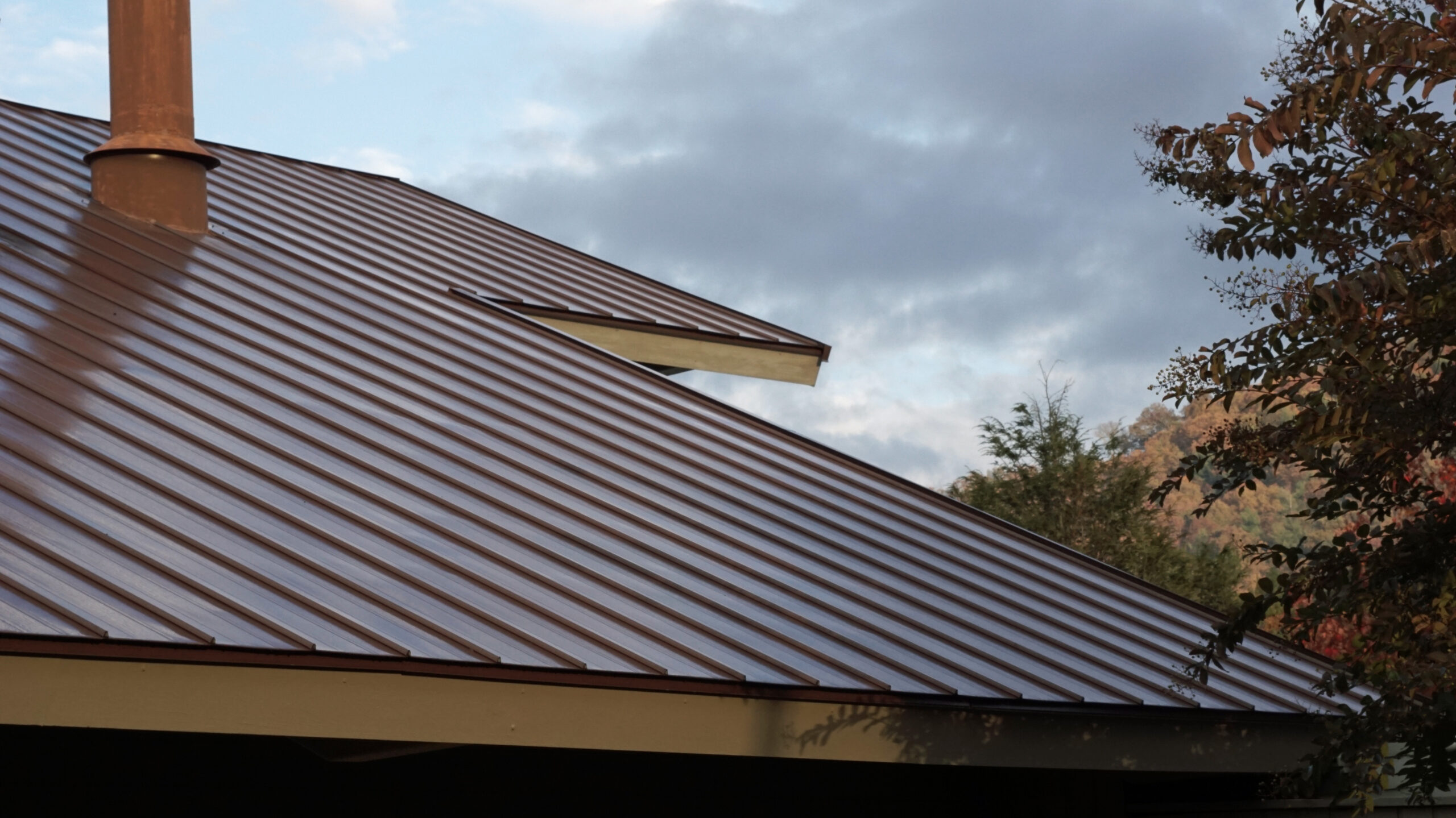
A roof does more than cover your home. It collects, directs, and sheds thousands of gallons of rainwater every year. In the Portland metro area, where rainy seasons are long and rooflines are often surrounded by trees, proper drainage is one of the most important parts of protecting your home from water damage.
When roof drainage works correctly, rainwater moves from shingles to valleys, into gutters, through downspouts, and away from the foundation. When one part of that system fails, water can back up, overflow, and create expensive problems.
This guide explains how roof drainage works, why it matters in Oregon’s wet climate, and what homeowners can do to prevent leaks, rot, and moisture damage.
Why roof drainage matters
Rainwater always follows the easiest path. A properly designed roof and gutter system gives water a safe path away from the home.
Without effective drainage, water may:
- Back up under shingles
- Overflow behind gutters
- Rot fascia boards
- Damage siding and trim
- Erode landscaping
- Pool near the foundation
- Enter crawlspaces or basements
Many major water problems start as small drainage issues that go unnoticed for months or years.
The four parts of a roof drainage system
1. Roof slope
The slope of your roof determines how quickly water moves. Steeper roofs shed rain faster, while lower-slope areas drain more slowly and require careful detailing.
A roof with poor slope or sagging areas may allow water to sit longer than intended. Standing water increases the risk of leaks, moss growth, and material deterioration.
2. Roof valleys
Valleys are where two roof planes meet. They carry more water than most other parts of the roof because runoff from multiple sections concentrates in one area.
In Portland, valleys often collect:
- Leaves
- Pine needles
- Moss debris
- Small branches
- Shingle granules
When debris builds up in valleys, water can slow down, spread sideways, or push under shingles. This makes valley maintenance especially important.
3. Gutters
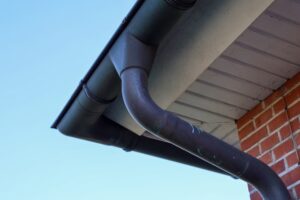
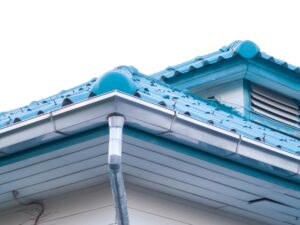
Gutters collect water at the roof edge and direct it toward downspouts. The right gutter system should be sized and pitched to handle the volume of runoff from your roof.
If gutters are clogged, undersized, sagging, or improperly pitched, they can overflow even during normal rain.
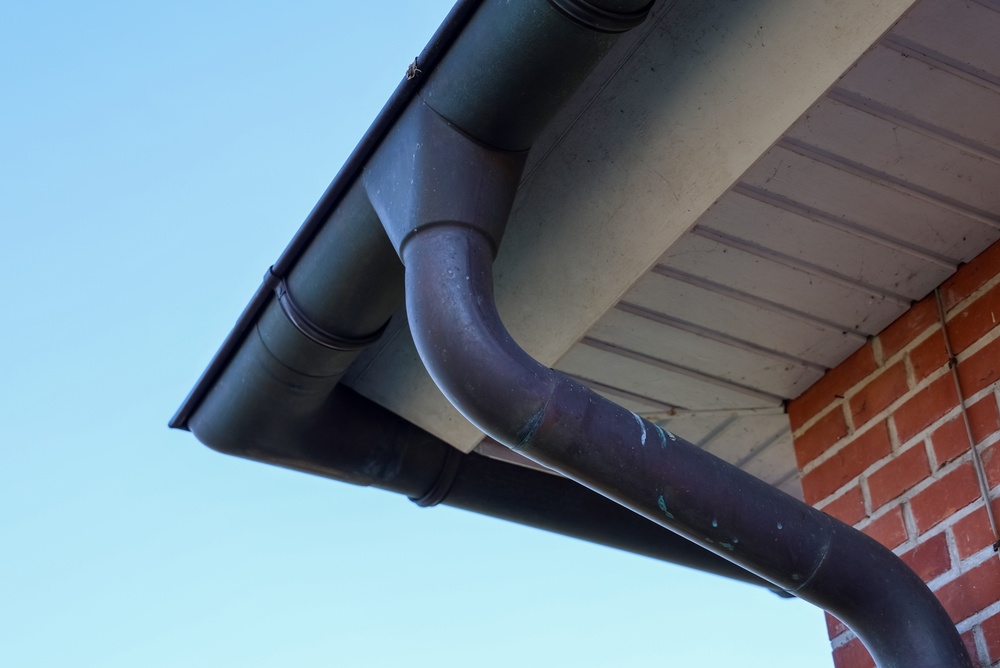
4. Downspouts
Downspouts move water from gutters to the ground or drainage system. Their placement and size are just as important as the gutter itself.
A downspout that dumps water next to the house can cause foundation moisture, soil erosion, and crawlspace problems. A good system discharges water safely away from the home.
Common drainage problems Portland homeowners should watch for
Clogged gutters
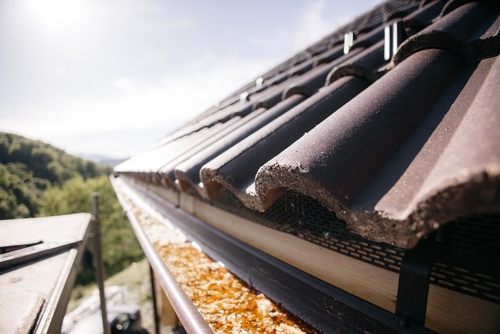
Leaves, needles, moss, and roof grit can fill gutters quickly. Once gutters clog, water spills over the edge and may damage fascia, siding, and foundation areas.
Undersized gutters
Some homes produce more roof runoff than standard gutters can handle. Large roof planes, steep slopes, and concentrated valleys may require larger gutters or additional downspouts.
Poor gutter pitch
Gutters need a slight slope toward the downspouts. If the pitch is wrong, water sits inside the gutter, increasing debris buildup and overflow risk.
Downspouts too close to the foundation
Even if the gutters work perfectly, the drainage system can fail if downspouts discharge water directly next to the home.
Valley debris
Debris in roof valleys can slow runoff and push water under shingles. This is especially common on shaded homes with nearby trees.
Damaged flashing
Flashing around valleys, chimneys, skylights, and walls helps guide water safely away from vulnerable areas. When flashing fails, drainage problems often become leaks.
Signs your roof drainage system may be failing
Watch for these warning signs:
- Water spilling over gutter edges during rain
- Gutters holding standing water after storms
- Soil erosion below downspouts
- Water pooling near the foundation
- Staining or rot on fascia boards
- Moss or debris collecting in valleys
- Ceiling stains near exterior walls
- Damp crawlspace or basement odors
- Peeling paint near roof edges
If you see more than one of these symptoms, the issue may not be a single clog—it may be a larger drainage design problem.
Why Portland homes need extra drainage attention
Portland’s climate creates a perfect setup for drainage problems:
- Frequent rain keeps surfaces wet longer
- Mature trees drop leaves and needles into gutters and valleys
- Moss thrives on shaded roofs
- Winter storms can overwhelm undersized systems
- Long wet periods make small leaks harder to detect early
A drainage system that might work fine in a drier climate can struggle in the Pacific Northwest if it is not sized, maintained, and installed correctly.
How gutters protect your roof
Gutters are not just for protecting landscaping. They also help protect the roof edge.
When gutters work properly, they prevent water from:
- Running behind fascia boards
- Soaking the roof edge
- Backing up beneath shingles
- Splashing against siding
- Overloading lower roof sections
If gutters are loose or clogged, roof edge damage often follows.
How downspouts protect your foundation
Downspouts complete the drainage system by moving water away from the home.
For better foundation protection:
- Extend downspouts several feet away from the house
- Avoid discharging water onto walkways or patios that slope back toward the foundation
- Add additional downspouts where long gutter runs overflow
- Consider underground drainage or daylighted discharge where needed
- Keep downspouts clear of clogs
A working gutter with a poor downspout layout is still an incomplete system.
When to consider larger gutters
Some homes need more capacity than a standard gutter system provides.
Larger gutters may be helpful if:
- Water overshoots the gutter during heavy rain
- Large roof sections drain to one short gutter run
- Multiple valleys discharge into the same area
- Gutters overflow even when clean
- The home has steep roof slopes
- Downspouts are frequently overwhelmed
For many homes, upgrading from 5-inch gutters to 6-inch gutters can improve capacity, especially when paired with larger or additional downspouts.
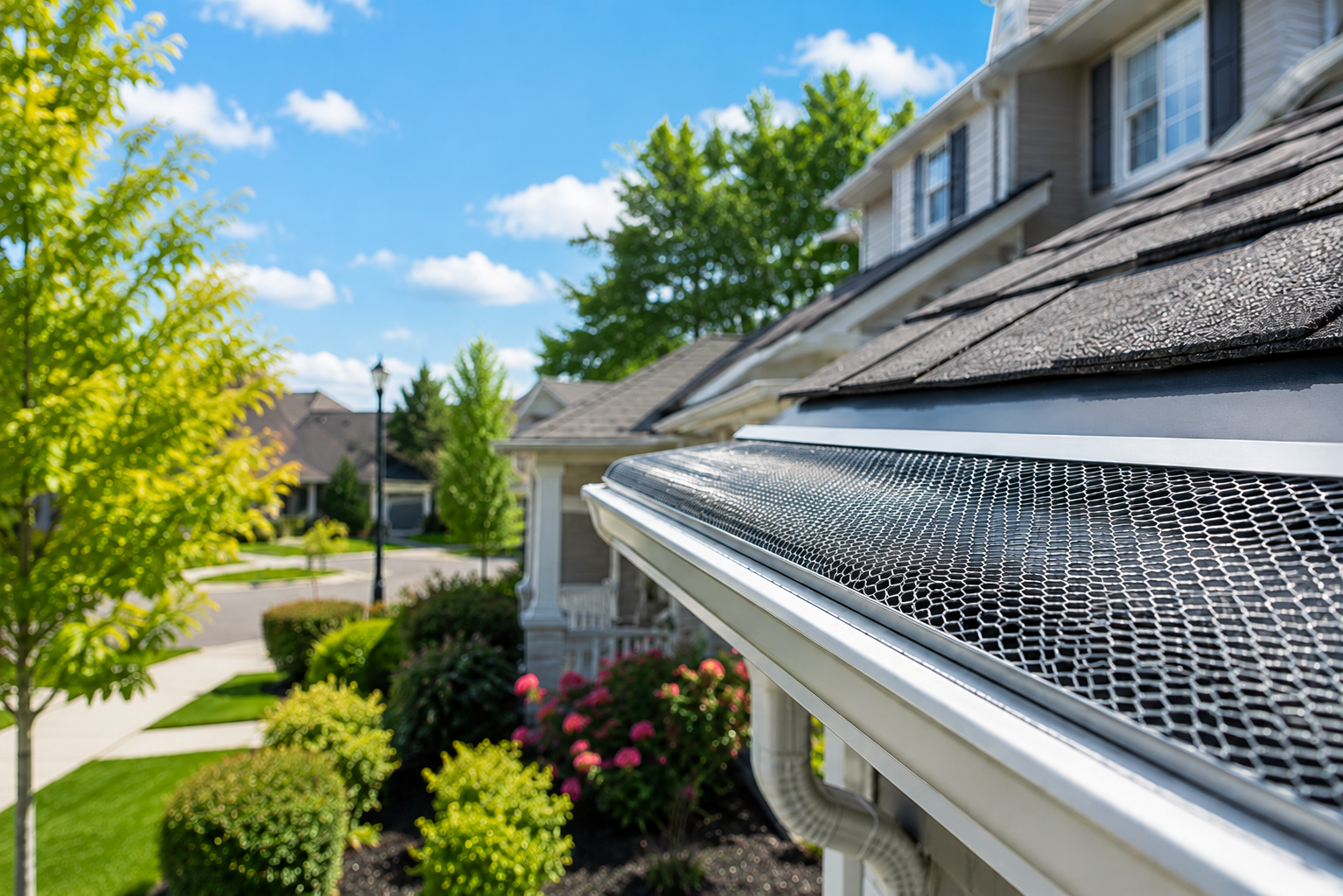
The role of gutter guards
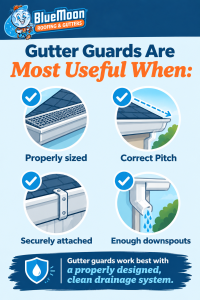
Gutter guards can help reduce debris buildup and keep water flowing, especially in tree-heavy neighborhoods.
They are most useful when the existing gutter system is:
- Properly sized
- Correctly pitched
- Securely attached
- Paired with enough downspouts
- Clean before installation
Gutter guards are not a substitute for proper drainage design, but they can reduce clogs and maintenance when installed correctly.
Seasonal roof drainage checklist
Spring
- Clear gutters and downspouts
- Check for winter storm damage
- Inspect roof valleys for debris
- Look for fascia staining or peeling paint
Summer
- Trim branches away from the roofline
- Repair sagging gutters or loose hangers
- Evaluate downspout discharge locations
- Schedule upgrades before the rainy season
Fall
- Remove leaves and needles
- Flush downspouts before winter rain
- Inspect gutter guards if installed
- Confirm water is draining away from the foundation
Winter
- Watch gutters during storms
- Look for overflow or pooling water
- Document any leaks or moisture issues
- Call for repair if water is backing up or entering the home
Questions to ask a contractor about drainage
Before approving gutter or roof work, ask:
- Are my gutters correctly sized for my roof?
- Do I have enough downspouts?
- Is the gutter pitch correct?
- Are valleys draining properly?
- Is water being discharged far enough from the foundation?
- Are any fascia boards damaged from overflow?
- Would gutter guards help on my property?
- Should any flashing be repaired while drainage work is being done?
Good drainage recommendations should consider the entire system—not just one component.
Frequently asked questions
Can clogged gutters cause roof leaks?
Yes. When gutters clog, water can back up at the roof edge and contribute to fascia rot, shingle edge damage, and water intrusion.
How do I know if my gutters are too small?
If gutters overflow during moderate rain even when clean, they may be undersized or have too few downspouts.
Are valleys more likely to leak?
Valleys handle concentrated water flow, so they are more vulnerable when debris builds up or flashing fails.
Should I replace gutters when replacing my roof?
Not always, but it is a smart time to inspect them. If gutters are leaking, sagging, undersized, or poorly pitched, upgrading them during roof work can improve long-term protection.
Do gutter guards solve drainage problems?
They help reduce clogs, but they do not fix poor gutter slope, undersized gutters, or bad downspout placement.
Better drainage means better home protection
Roof drainage is one of the most important systems protecting your home from water damage. When roof slopes, valleys, gutters, and downspouts all work together, water moves safely away from the structure. When one part fails, the entire home can be affected.
For Portland-area homeowners, staying ahead of drainage issues is especially important because of frequent rain, tree debris, and moss growth.
Blue Moon Roofing & Gutters, based in Gresham, provides roof inspections, gutter installation, gutter repair, gutter guards, and drainage-focused evaluations for homeowners throughout the Portland metro area.