 Call Now
 Get In Touch
 Book Now

Metal roofing is becoming a popular choice for Pacific Northwest homeowners who want durability, low maintenance, and a modern look. This guide explains the main metal roof types, the benefits and tradeoffs for Portland-area homes, expected costs and lifespans, noise and insulation concerns, and practical questions to ask your contractor.
Quick takeaways
-
Best fits: homeowners who want long life (40+ years), minimal maintenance, and good wind/snow performance.
-
Common profiles: standing-seam (hidden fasteners) and exposed-fastener panels. Standing-seam is more premium and longer-lasting.
-
PNW benefits: excellent resistance to rain, rot, and moss; good for steep and low-slope roofs with proper underlayment.
-
Tradeoffs: higher upfront cost than asphalt shingles, potential for expansion-contraction noise if not installed correctly, and aesthetic fit for some home styles.
-
Work with installers who understand local conditions (Gresham/Portland rain, moss, tree drip) and who follow manufacturer install specs to preserve warranties.
Types of residential metal roofs
-
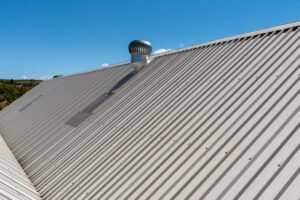
Standing-seam metal roof — vertical panels with raised seams where the panels interlock. Fasteners are concealed, creating a clean look and reduced leak risk. Best for longevity and premium projects.
-
Exposed-fastener metal panels — ribbed or corrugated sheets fastened through the panel face. Lower cost but more vulnerable at fasteners and seams.
-
Metal shingles & tiles — stamped profiles that mimic shakes or slate; combine metal’s durability with a traditional appearance. Cost sits between exposed panels and standing-seam.
-
Galvalume / coated steel / aluminum — common materials. Aluminum resists corrosion in coastal or high-moisture environments; Galvalume (aluminum-zinc coating) is a durable steel option.
Benefits for Portland & PNW homes
-
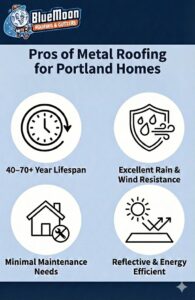
Longevity: Metal roofs regularly reach 40–70 years depending on material and maintenance.
-
Weather resistance: Excellent at shedding heavy rain and surviving wind uplift when properly fastened. Snow and ice slide off steeper metal roofs, reducing snow-load concerns.
-
Low maintenance: No rot, limited moss growth compared to shingles; periodic inspections and gutter care are usually sufficient.
-
Energy performance: Reflective finishes reduce heat gain in summer, which can lower attic temperatures and cooling loads.
-
Recyclable & lightweight: Metal roof panels are often recyclable and put less dead load on the structure than tile or slate.
Tradeoffs & concerns
-
Upfront cost: Metal roofs cost more upfront than asphalt shingles. Expect a higher initial investment that can pay back over the roof’s life.
-
Sound: Proper underlayment, insulation, and deck attachment minimize rain noise. Installed correctly, metal roofs are not significantly noisier than shingles.
-
Thermal movement: Metal expands and contracts with temperature changes. Installers must use clips, appropriate fasteners, and allow for movement to prevent oil-canning and fastener fatigue.
-
Aesthetics: Not every home style suits a metal roof; choose profiles and colors that complement your house.
-
Installation quality matters: Incorrect fasteners, improper underlayment, or failing to follow manufacturer specs can cause leaks, warranty issues, or premature problems.
Cost factors — what affects the price
-
Material choice: Aluminum and standing-seam with thicker gauge metal cost more than exposed-fastener steel panels.
-
Gauge / thickness: Lower gauge = thicker metal = higher cost and greater longevity.
-
Roof complexity: Valleys, penetrations, dormers, and steep slopes increase labor and flashing needs.
-
Underlayment & insulation: Adding specialized underlayment, ice & water barriers, or additional attic insulation increases cost but improves performance.
-
Local access & removal: Tear-off, dumpster, and staging logistics (protecting landscaping, driveway) influence price.
-
Warranty level & finish: Premium factory finishes and longer finish warranties increase material cost.
Typical price ranges (ballpark)
-
Exposed-fastener metal panels: lower-end; suitable for simple sheds or agricultural buildings.
-
Standing-seam residential metal: mid to high range — often 2–4× the cost of conventional asphalt shingles depending on material and roof complexity.
-
Exact local pricing varies—get multiple written proposals showing materials, gauge, finish, underlayment, flashing details, and warranty terms.
Noise & insulation — practical realities
-
Is metal noisy in rain? With a properly installed underlayment and a ventilated attic, rain noise is minimal for most homeowners in Beaverton. Solid deck, insulation, and high-quality underlayment dampen sound.
-
Thermal comfort: Metal can be reflective (reducing heat gain) but can also radiate heat to the attic if not ventilated correctly. Pair metal roofs with balanced attic ventilation and adequate insulation.
Snow, ice, and roofs in the PNW
-
Snow shedding: Smooth metal surfaces allow snow to slide; consider snow guards or retention systems on steep metal roofs to manage shedding and protect gutters or entryways.
-
Ice dams: Metal reduces ice dam risk on steep slopes, but low-slope metal roofs still need proper ice & water protection at eaves.
Warranties & finish coatings
-
Manufacturer finish warranties vary; premium PVDF or Kynar coatings offer longer fade and chalk warranties.
-
Installation warranty: Ask the contractor about a workmanship warranty (length and coverage). Documented warranties and adherence to manufacturer install guides are essential for claim support.
Questions to ask your metal roofer
-
Which metal profile and gauge do you recommend and why?
-
What finish (coating) is specified and what warranty does it carry?
-
How will you handle thermal movement and fastening (clips vs. through-fasteners)?
-
What underlayment and ice & water protection do you install for PNW climate?
-
Will you provide a photo report and final magnetic sweep (if tear-off occurs)?
-
What workmanship warranty do you offer, and will you help register any manufacturer warranties?
Maintenance & care
-
Routine inspection: Check seams, flashings, and fasteners annually or after storms.
-
Gutters & downspouts: Keep gutters clear—metal roofs shed water quickly and heavy flow can overwhelm undersized gutters.
-
Avoid contact corrosion: If mixing dissimilar metals, ensure compatible flashings and fasteners to prevent corrosion.
-
Repainting/finish: Premium finishes last decades but inspect for localized wear near roof-to-wall transitions.
Is metal roofing right for your home?
Metal roofing is an excellent option if you value lifespan, minimal maintenance, and weather resistance. It’s especially attractive for homeowners planning to stay long-term, wanting a low-maintenance exterior, or living on windy, wet, or snow-prone lots. If your budget is limited or you prefer a specific historic aesthetic, high-quality asphalt shingles or metal shingles that mimic traditional materials may be alternatives.
Frequently asked questions
Will a metal roof increase my home resale value?
Many buyers view metal roofing as an upgrade because of longevity and low maintenance, but resale value depends on market preferences and aesthetic fit.
Do metal roofs attract lightning?
No—metal roofs are not more likely to attract lightning than other materials. Metal is non-combustible and can help dissipate a strike safely if grounding is appropriate per code.
How long will a standing-seam metal roof last?
Properly installed and maintained, standing-seam metal roofs commonly last 40–70 years depending on material and finish.
If you’d like a tailored recommendation for your Portland-area home—material options, likely costs, and an installation plan—Blue Moon Roofing & Gutters (based in Gresham) can inspect your roof and provide a photo-documented proposal. Call (503) 825-2583 to schedule.